Ashtanga Yoga Primary Series, also known as Yoga Chikitsa (yoga therapy), is the foundation of the Ashtanga Yoga system. It begins with energizing sun salutations and standing poses, moves into seated forward bends, twists, and hip openers, and ends with inversions and meditative postures — a full-body, breath-led practice aimed at detoxifying the organs, building strength and flexibility, and calming the nervous system.
What is the Ashtanga Yoga Primary Series?
The Primary Series is the first of six structured sequences in the Ashtanga Yoga system, formalized by Sri K. Pattabhi Jois of Mysore, India. Unlike styles that vary session to session, Ashtanga follows a fixed sequence — the same poses in the same order every time — allowing you to internalize the practice, track progress, and deepen into each posture over time.
The system synchronizes precise asanas with deep Ujjayi breathing (pranayama), energy locks (bandhas), and gaze points (drishti).
Complete Primary Series Breakdown
The series flows through four main segments, each building on the last.
Opening Sequence
The opening sets the physical and energetic tone. It begins with the Opening Mantra, then flows into two sun salutations that warm the body, link movement with breath, and prepare the mind.
Opening Mantra
"Vande Gurunam Charanaravinde… Pranamami Patanjalim"
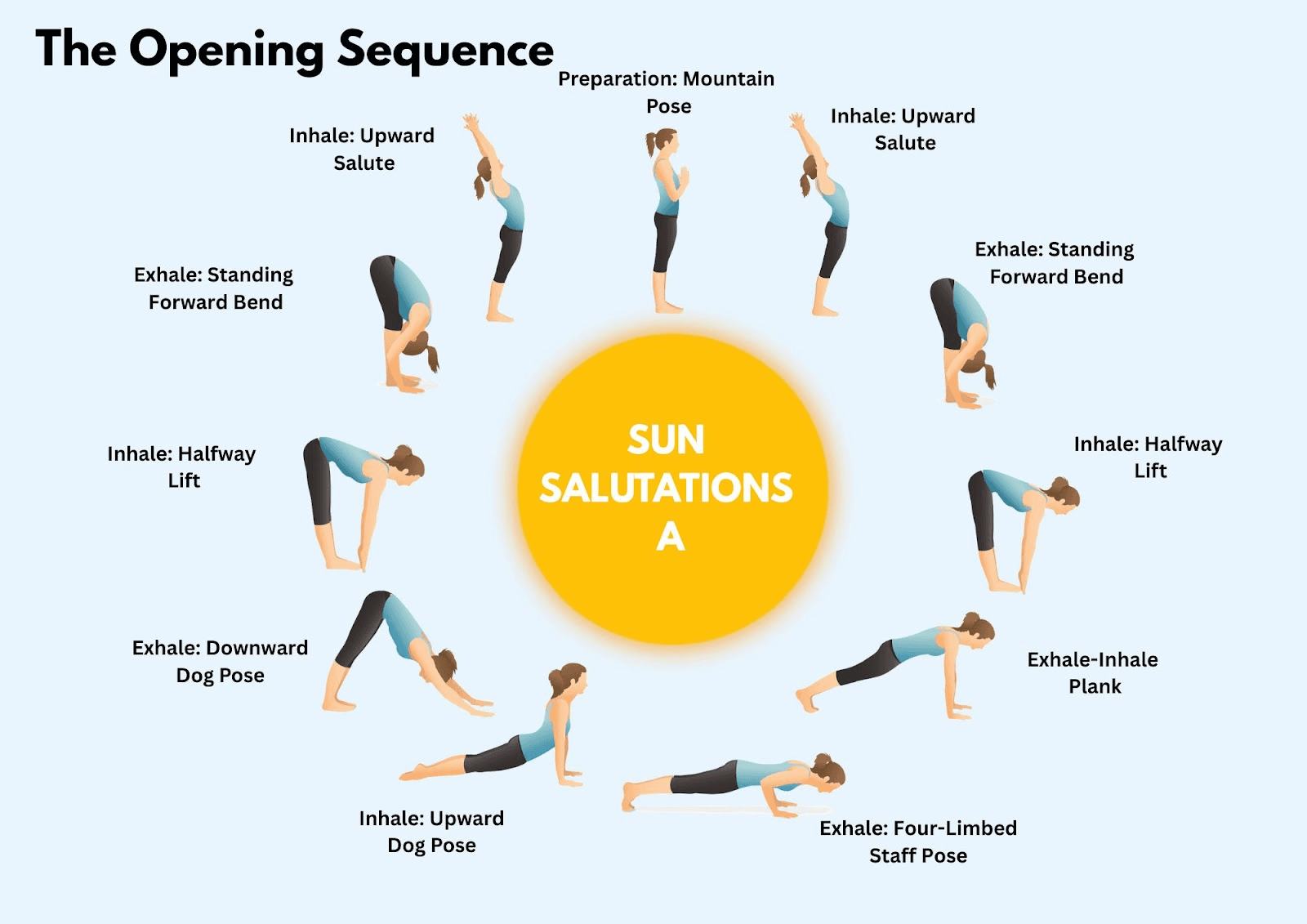
i) Surya Namaskara A — Sun Salutation A
Performed 5 times, Surya Namaskara A establishes breath-body synchronization and builds internal heat. Every movement is paired with one breath — either inhale or exhale.
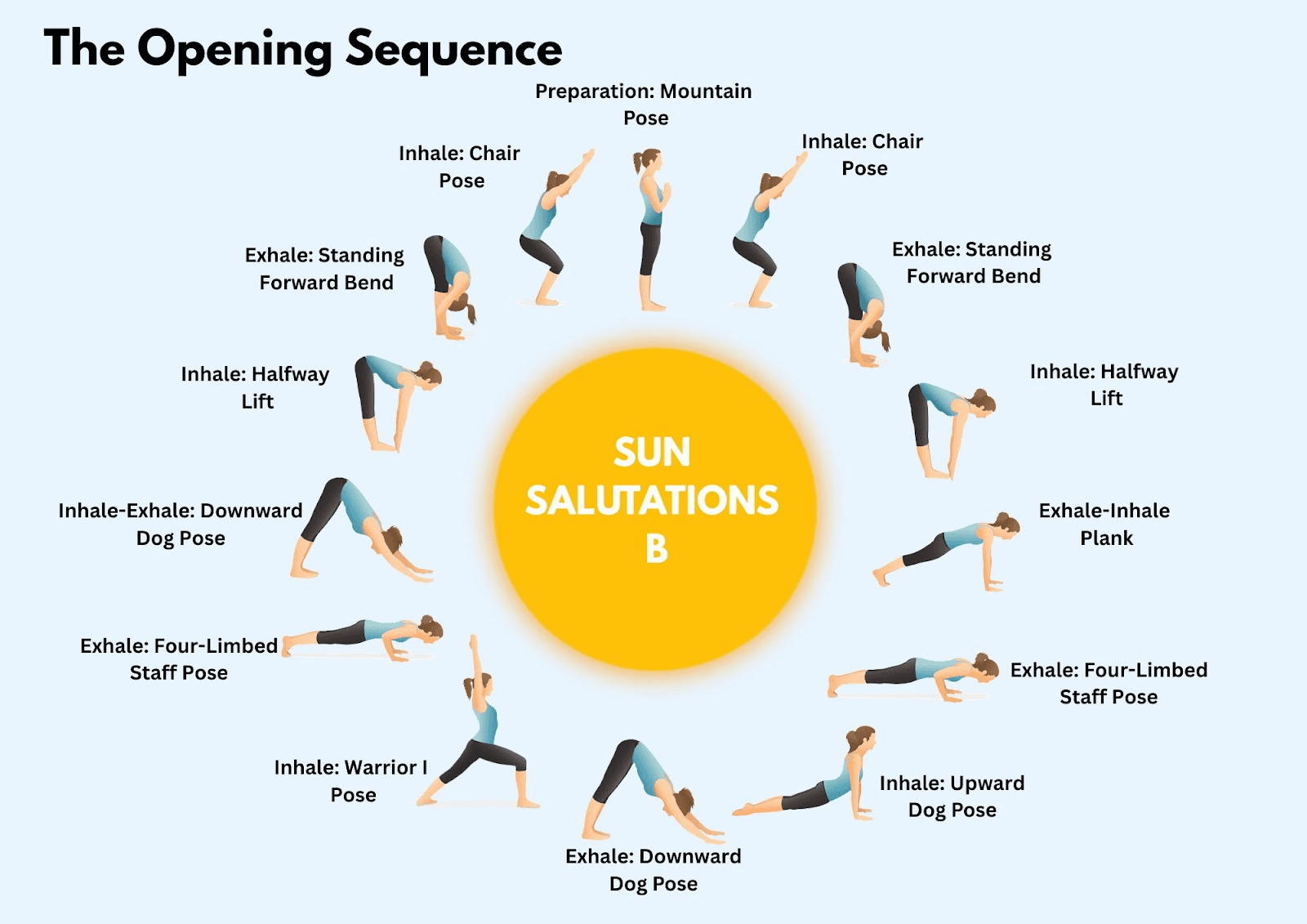
ii) Surya Namaskara B — Sun Salutation B
Performed 5 times, Surya Namaskara B builds on A with added complexity — introducing Utkatasana (Chair Pose) and Virabhadrasana I (Warrior I) to deepen heat and strength.
Practice Tips
- Every movement is paired with one breath — inhale or exhale.
- Your breath should be audible, slow, and steady (Ujjayi).
- Maintain drishti (gaze) at specific points — nose, thumbs, or navel — for focus.
Standing Sequence
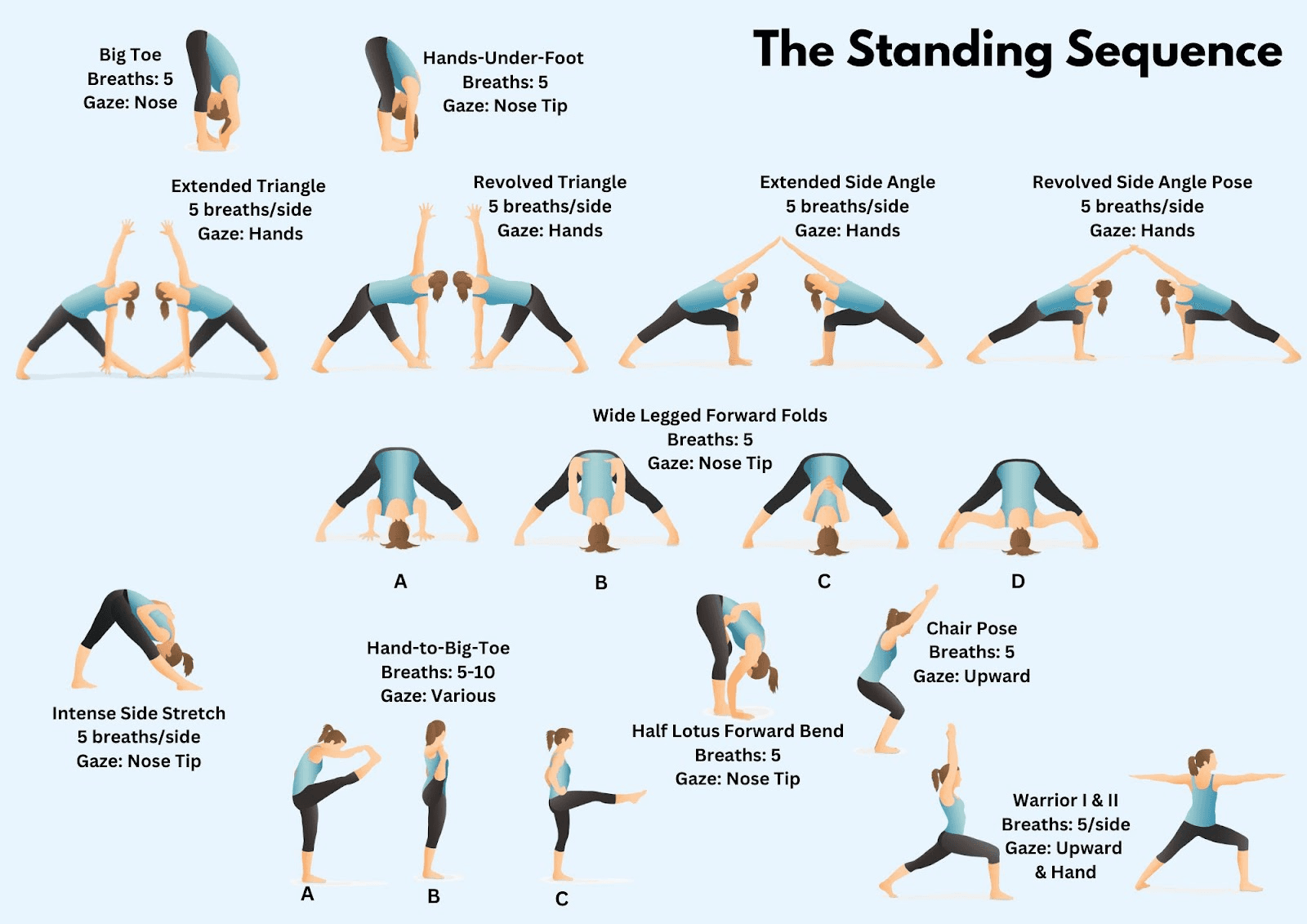
After the fifth round of Surya Namaskara B, flow directly into the Standing Sequence — no pause. This segment opens the hips, strengthens the legs, stabilizes the spine, and sets the tone for breath-guided movement.
Practice Tips
- Use props like blocks, a bolster, or a chair for extra support.
- Flow into each pose slowly, guided by your breath.
- Ground through the feet and engage the core in all standing asanas.
- Keep the breath strong and steady to maintain heat and focus.
Seated Sequence
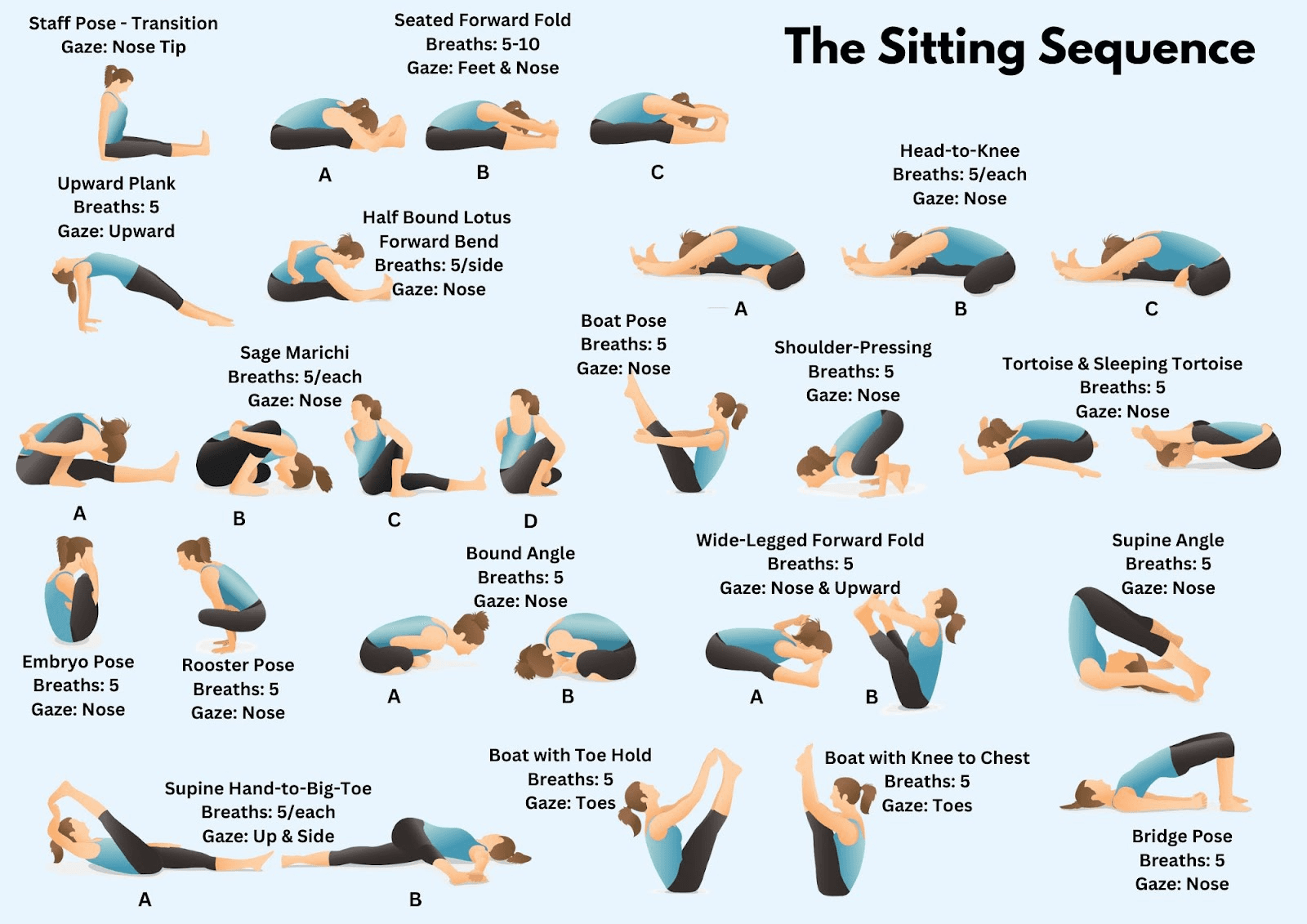
The Seated Sequence marks a shift from active energy to a more introspective, meditative phase. Forward folds, hip openers, twists, and arm balances cleanse and detoxify, stretch connective tissues, and prepare the body for the final sequence.
Practice Tips
- Use props like blocks or straps for tight hips and hamstrings.
- Maintain a steady breath to avoid fatigue during repetitive flows.
Finishing Sequence
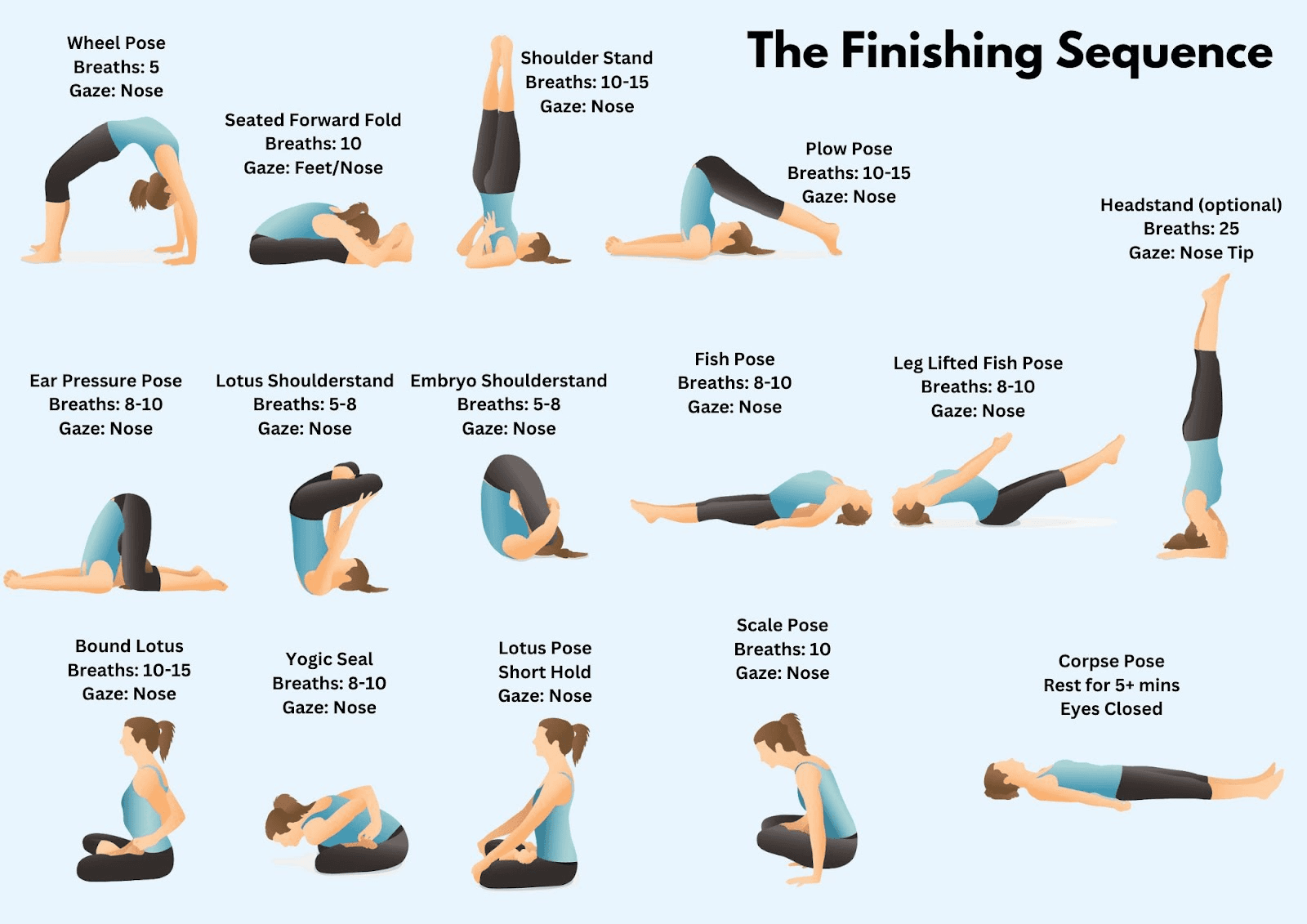
The Finishing Sequence seals the practice, calms the nervous system, and prepares the body for rest and meditation. It consists of inversions, backbends, seated holds, and ends in deep stillness — Savasana (Corpse Pose).
Practice Tips
- Use a wall or props for support in inversions if you're a beginner.
- Keep your breath soft and steady during inversions and seated holds.
Closing Mantra
"Swasti prajaabhyah paripalayantam… Om Shanti Shanti Shantihi"
Essential Breathing & Bandha Techniques
The practice is powered by the Tristana method — the triad of breath (Ujjayi), energy locks (bandhas), and gaze points (drishti).
Ujjayi Breathing — Victorious Breathing
A slow, rhythmic breath with a slight throat constriction creating a soft "ocean" sound. It regulates the nervous system, builds heat, and anchors present-moment awareness — maintained from the first Sun Salutation to final Savasana.
1. Mula Bandha — Root Lock
Draws energy upward from the pelvic floor. The foundational bandha, engaged throughout the entire practice.
- Sit or stand tall.
- Gently contract the muscles of the perineum (between the anus and genitals).
- You will feel a subtle sensation, like stopping the flow of urine midstream.
2. Uddiyana Bandha — Abdominal Lock
Lifts energy through the solar plexus and supports posture.
- Exhale completely.
- Pull the lower belly inward and upward under the rib cage without inhaling.
- Hold gently, then release and inhale.
- In regular practice, maintain a soft version of Uddiyana Bandha while breathing.
3. Jalandhara Bandha — Throat Lock
Used primarily in pranayama and seated meditation.
- Sit in a comfortable position with the spine erect.
- Inhale, then drop the chin gently toward the chest.
- Simultaneously lift the sternum slightly without collapsing the neck.
Drishti — Gaze Points
Each asana has a specific drishti to direct the gaze and calm the mind, helping internalize focus and reduce distractions.
| Drishti | Focus Point | Example Poses |
|---|---|---|
| Nasagrai | Tip of the nose | Forward folds, seated asanas |
| Bhrumadhya | Between the eyebrows | Inversions, balancing poses |
| Hastagrai | Hand | Triangle poses, side angles |
| Padayoragrai | Toes | Boat pose, forward folds |
| Urdhva Drishti | Upward | Upward salute, Chair pose |
| Nabhichakra | Navel | Downward Dog |
| Parsva Drishti | Side | Revolved poses |
Benefits of Regular Primary Series Practice
🏋️
Physical
- Builds core, shoulder & leg strength
- Improves flexibility & joint mobility
- Stimulates circulation & natural detox
🧘
Mental
- Sharpens focus through fixed drishti
- Builds discipline & self-mastery
- Reduces stress & emotional reactivity
🌿
Spiritual
- Clears energetic blockages
- Deepens inner awareness
- Cultivates self-inquiry & reflection
Getting Started with the Primary Series
You don't need to be an advanced practitioner. Start with just the Sun Salutations and a few standing poses, gradually adding seated postures one at a time. Here's what to keep in mind:
Practice Tips
- Focus on quality over quantity — begin with Sun Salutations and a few standing poses.
- Aim for 3–4 sessions per week to build rhythm and strength.
- Use props like blocks or straps for support.
- Skip advanced inversions like headstand until you're ready.
- Breathe with awareness and honor the rhythm.
- Don't force yourself into poses — notice signs of pain or discomfort.
Frequently Asked Questions
How long does the Ashtanga Primary Series take?+
The full Primary Series typically takes 60 to 90 minutes to complete, depending on pace and number of flows. Beginners may start with shorter versions and gradually build endurance over time.
Can beginners do the Primary Series?+
Yes! Starting with just the Sun Salutations and Standing Sequence is a common beginner-friendly approach. Props make it safe and accessible. If you're new, work with an experienced coach to ensure safety and proper progression.
How often should I practice?+
Traditionally, the series is practiced six days a week, with rest on Saturdays and moon days. Beginners can start with 3–4 days per week, allowing time for the body to adapt.
Do I need to chant the mantras?+
Chanting is optional but recommended. The opening mantra honors the lineage and cultivates focus; the closing mantra expresses gratitude. Listening to a teacher or recording can help if you're unsure of pronunciation.