Anxiety keeps the body in a low-grade fight-or-flight state — fast shallow breath, a racing heart, tight shoulders and jaw, a busy mind. Yoga works on this directly: slow breathing and long, supported holds activate the vagus nerve and the parasympathetic “rest-and-digest” system, teaching the nervous system that it is safe to settle.
A note on scope
Yoga is a strong self-care tool and a useful complement to therapy and medication, but it is not a substitute for professional treatment of an anxiety disorder, panic disorder, or PTSD. If symptoms are severe or persistent, please work with a qualified mental-health professional. If any practice increases distress, stop and return to normal breathing.
How Yoga Calms an Anxious Nervous System
🌬️
Breath
- Lengthening the exhale slows the heart rate
- Steady nasal breathing signals safety to the brain
🧎
Body
- Releases the chronic tension anxiety stores in the body
- Grounding poses shift attention out of the racing mind
⏳
Attention
- A simple focus — breath, sensation — interrupts worry loops
- Regular practice builds tolerance for discomfort
Start with the Breath
Breath is the fastest way to change how you feel. Practise these for 3–6 minutes, seated or lying down, before the postures — or on their own whenever anxiety spikes.
Extended-Exhale Breathing
The single most reliable calming technique.
- Breathe in through the nose for a count of 4.
- Breathe out slowly through the nose for a count of 6–8.
- Keep the belly soft and let the exhale be unforced.
- Continue for 10–20 rounds.
Bhramari — Humming Bee Breath
The vibration and long exhale soothe a busy mind.
- Sit comfortably and rest the fingertips lightly over the ears or closed eyes.
- Inhale through the nose, then hum softly on the exhale like a bee.
- Feel the vibration in the head and face.
- Repeat for 6–10 rounds.
A Calming Pose Sequence
Move slowly and hold each pose for 1–3 minutes with the extended-exhale breath. The order moves from gently active to fully restorative.
Standing Forward Fold
Uttanasana
Releases the neck, shoulders and back · a gentle, calming inversion
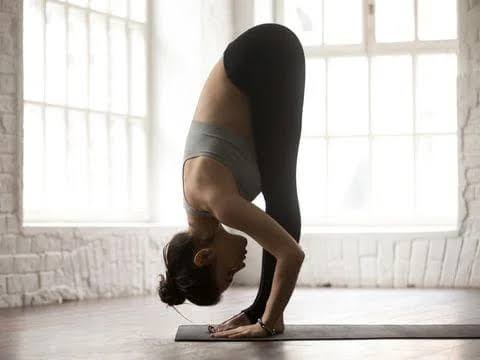
- 1.Stand with feet hip-width apart and a soft bend in the knees.
- 2.Hinge from the hips and let the upper body hang.
- 3.Hold opposite elbows and let the head be heavy.
- 4.Sway slightly and breathe for 8–12 slow breaths.
Practice Tips
- Bend the knees generously and rest the hands on blocks.
- Come up slowly to avoid light-headedness.
Cat–Cow
Marjaryasana–Bitilasana
Links breath to movement · discharges restless, nervous energy
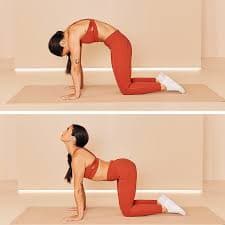
- 1.Start in tabletop, wrists under shoulders and knees under hips.
- 2.Inhale into Cow — belly down, chest and tailbone lifting.
- 3.Exhale into Cat — spine rounding, chin and tailbone tucking.
- 4.Flow with the breath for 10–15 rounds.
Practice Tips
- Pad the knees with a blanket.
- Keep the movements small and smooth.
Standing Forward Fold at the Wall
Ardha Uttanasana
A grounding, supported shape that quietens the mind without strain
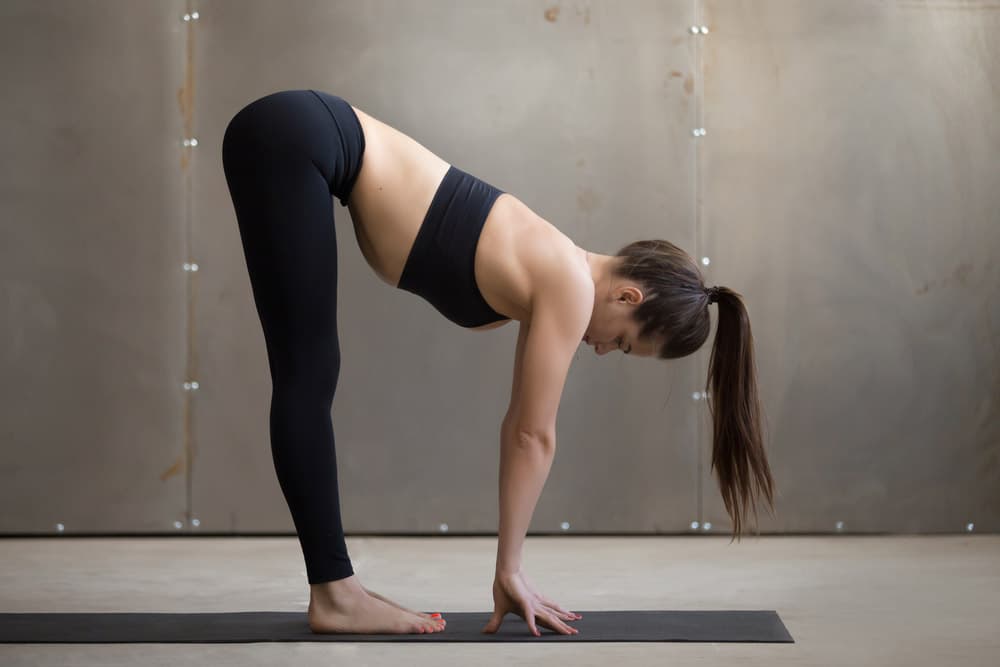
- 1.Stand an arm's length from a wall and place the palms on it at hip height.
- 2.Walk the feet back and fold at the hips until the torso is parallel to the floor.
- 3.Let the head and neck relax between the arms.
- 4.Hold for 8–10 breaths, pressing the hands lightly into the wall.
Practice Tips
- Raise the hand position on the wall to reduce the stretch.
- Keep a deep bend in the knees.
Legs Up the Wall
Viparita Karani
Strongly restorative · slows the heart rate and calms the mind
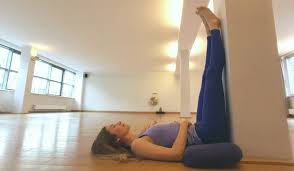
- 1.Sit side-on to a wall and swing the legs up as you lie back.
- 2.Rest the hips close to the wall and the legs against it.
- 3.Let the arms fall open, palms up.
- 4.Stay for 5–10 minutes with the extended-exhale breath.
Practice Tips
- Place a folded blanket under the hips.
- Bend the knees and rest the soles together if the hamstrings pull.
Supported Child's Pose
Salamba Balasana
A curled, protective shape that reliably signals safety to the body
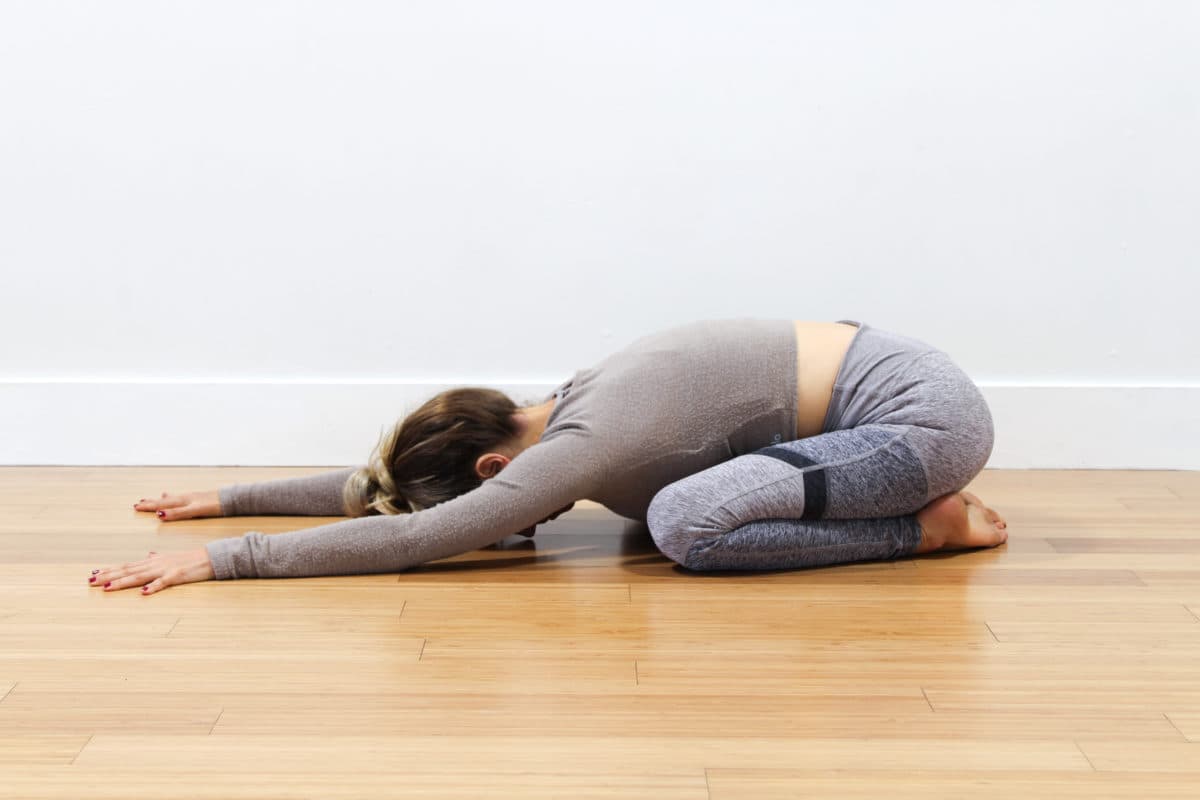
- 1.Kneel with the big toes together and knees wide.
- 2.Place a bolster or stacked pillows between the thighs.
- 3.Lower the torso onto the support and turn the head to one side.
- 4.Rest for 2–4 minutes, then turn the head the other way.
Practice Tips
- Add height to the support if the hips lift away from the heels.
- Place a cushion behind the knees if they are sensitive.
Reclined Bound Angle
Supta Baddha Konasana
Opens the chest and belly · a soft, spacious posture for slow breathing
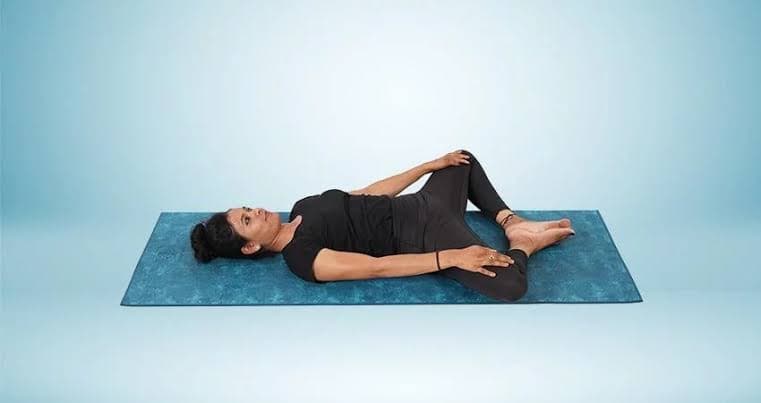
- 1.Sit in front of a bolster placed lengthwise behind you.
- 2.Bring the soles of the feet together and let the knees fall open.
- 3.Lie back over the bolster so the chest is gently supported.
- 4.Rest the arms out to the sides and stay for 3–5 minutes.
Practice Tips
- Support each knee on a block or cushion.
- Skip the bolster and lie flat if that feels more settling.
Corpse Pose
Savasana
Trains conscious relaxation · the practice of letting the body be still
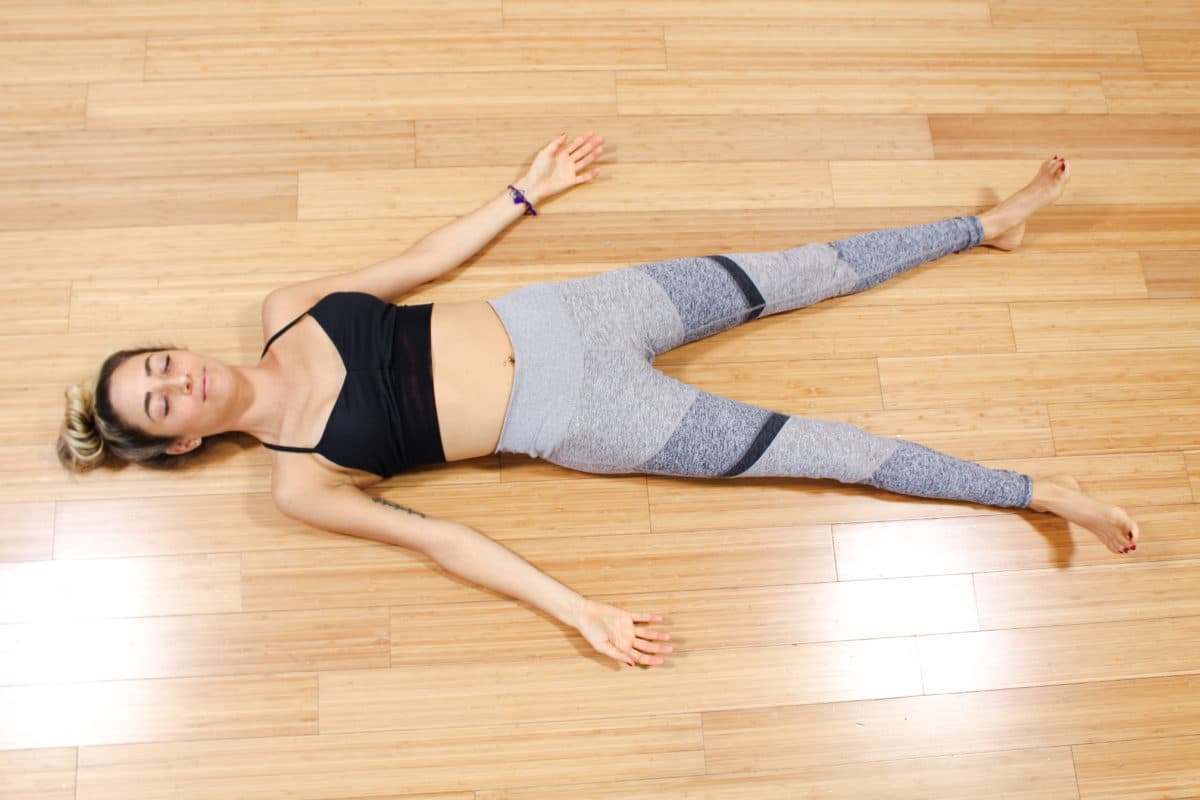
- 1.Lie on the back with the legs apart and arms away from the body.
- 2.Let the whole body be heavy and give its weight to the floor.
- 3.Keep the attention on the natural, slow breath.
- 4.Rest for 5–10 minutes.
Practice Tips
- Place a bolster under the knees and a blanket over the body.
- If lying still feels activating, keep the knees bent with the feet flat.
Making It Part of Daily Life
Practice Tips
- Practise a little every day rather than a long session once a week — regularity is what re-trains the nervous system.
- Use 3–5 minutes of extended-exhale breathing as a reset before stressful events.
- Keep a short 10-minute restorative sequence for high-anxiety days when a full practice feels like too much.
- Practise at the same time each day so it becomes automatic.
- Let go of achievement — with anxiety, the gentlest version of a pose is the most effective one.
Frequently Asked Questions
How quickly does yoga help with anxiety?+
Breath-focused practices can ease acute anxiety within minutes by slowing the heart rate. Reductions in baseline, day-to-day anxiety usually build over several weeks of regular short practice.
Which style of yoga is best for anxiety?+
Slow, breath-led and restorative styles — gentle Hatha, restorative, yin, and yoga nidra — are generally most calming. Fast, hot, or highly demanding classes can feel activating for some people, so introduce them carefully.
Can yoga replace therapy or medication?+
No. Yoga is a valuable complement that supports the nervous system and builds coping skills, but anxiety disorders, panic disorder, and PTSD are best treated by a qualified mental-health professional. Use yoga alongside, not instead of, that care.
What if a pose makes my anxiety worse?+
This can happen, especially with stillness or eyes-closed practice. Come out of the pose, open the eyes, and return to normal breathing or gentle movement. Keeping the eyes softly open, choosing more active poses, or practising with a teacher can all help.