Lower back pain is one of the most common reasons people first come to yoga. Most non-specific back pain is not caused by damage to the spine itself but by weak deep-core muscles, stiff hips, tight hamstrings, and long hours of sitting. A consistent, gentle yoga practice addresses all four — improving mobility, rebuilding stability, and calming the pain-sensitising stress response.
Before you begin
Sharp, shooting, or radiating pain down the leg, numbness, tingling, or loss of bladder control needs medical assessment before any practice. This sequence is for mild-to-moderate, non-specific lower back stiffness and ache. Move slowly and stop at the first sign of increasing pain.
Why Yoga Helps a Sore Lower Back
The lumbar spine is designed to be relatively stable while the hips and upper back move freely. When the hips and thoracic spine stiffen, the lower back is forced to compensate and becomes overworked. Yoga restores the balance.
🤸
Mobility
- Frees the hip flexors shortened by sitting
- Restores gentle rotation and extension to the spine
🏗️
Stability
- Activates transverse abdominis and glutes
- Trains the core to support the spine during daily movement
🧠
Nervous system
- Slow breathing lowers pain sensitivity
- Reduces the guarding and bracing that keep muscles tight
9 Poses for Lower Back Relief
Practise this as a flow, holding each pose for 5–10 slow breaths. Repeat the whole sequence once or twice daily.
Mobilise the Spine
Cat–Cow
Marjaryasana–Bitilasana
Gently articulates every segment of the spine · warms the low back
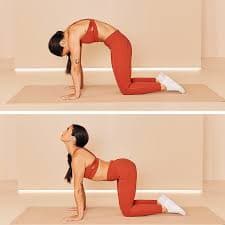
- 1.Start in tabletop with wrists under shoulders and knees under hips.
- 2.Inhale, drop the belly, lift the chest and tailbone into Cow.
- 3.Exhale, round the spine, tuck the tailbone and chin into Cat.
- 4.Move slowly with the breath for 8–10 rounds.
Practice Tips
- Pad the knees with a folded blanket.
- Keep the range small if the end of each movement pinches.
Knees-to-Chest
Apanasana
Decompresses the lumbar spine · releases the low back muscles
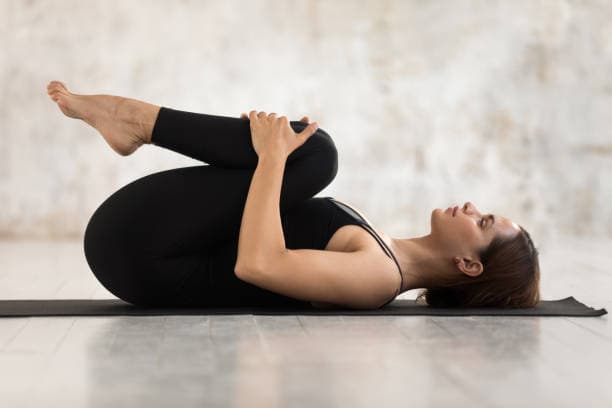
- 1.Lie on your back and draw both knees toward the chest.
- 2.Hold the shins or the backs of the thighs.
- 3.Keep the head and shoulders relaxed on the floor.
- 4.Optionally rock gently side to side to massage the low back.
Practice Tips
- Hold behind the thighs if the knees are sensitive.
- Take one knee at a time if both together is too much.
Supine Twist
Supta Matsyendrasana
Eases spinal rotation · releases the glutes and outer hip
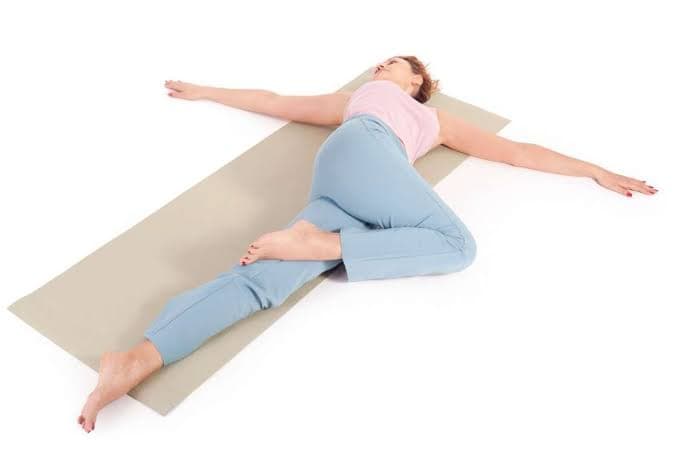
- 1.Lie on your back and hug the right knee in.
- 2.Guide it across the body to the left with your left hand.
- 3.Extend the right arm out and turn the gaze to the right.
- 4.Hold for 8–10 breaths, then change sides.
Practice Tips
- Place a cushion under the dropped knee to reduce the stretch.
- Keep both shoulders heavy — do not force the knee to the floor.
Open the Hips and Hamstrings
Low Lunge
Anjaneyasana
Lengthens the hip flexors that pull on the lumbar spine
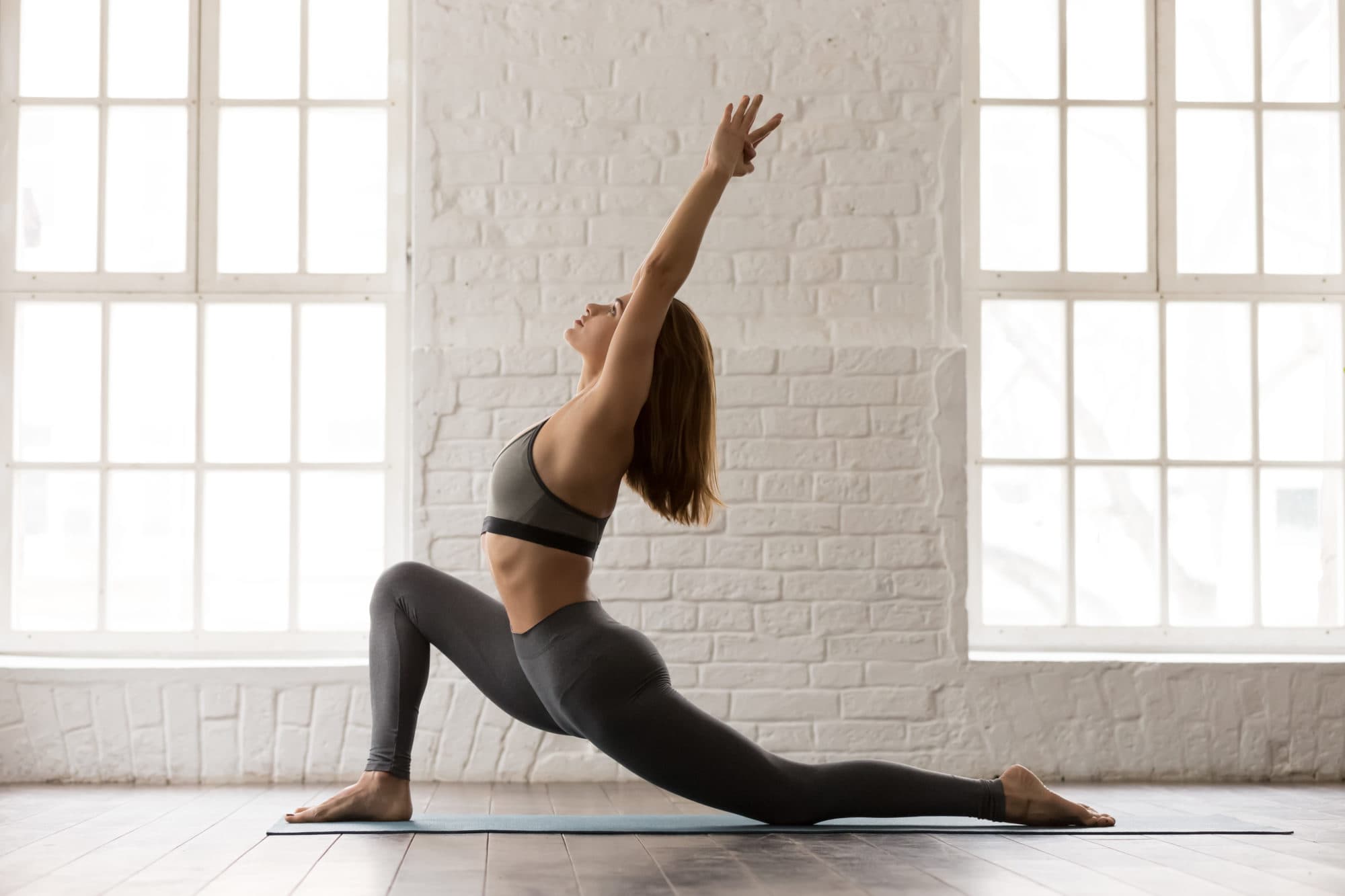
- 1.From tabletop, step the right foot between the hands.
- 2.Lower the back knee to the mat and untuck the toes.
- 3.Sink the hips forward and down until you feel a stretch at the front of the left hip.
- 4.Lift the chest and hold for 8–10 breaths, then swap sides.
Practice Tips
- Pad the back knee.
- Rest the hands on blocks or the front thigh for balance.
Reclined Hamstring Stretch
Supta Padangusthasana
Releases tight hamstrings that flatten the lumbar curve
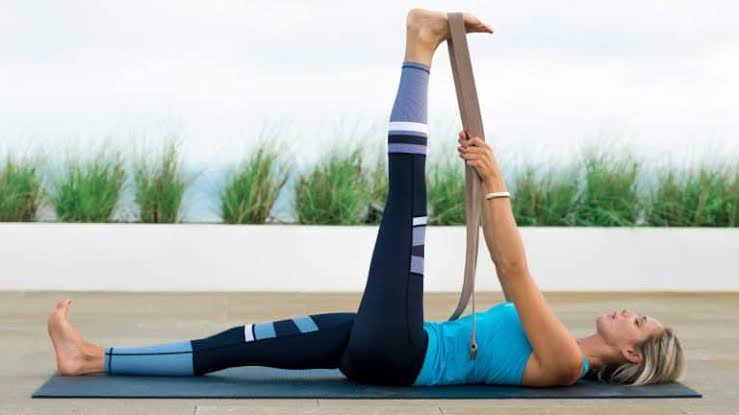
- 1.Lie on your back with both legs extended.
- 2.Loop a strap or belt around the right foot and raise the leg.
- 3.Straighten the knee as much as is comfortable, keeping the hips level.
- 4.Hold for 8–10 breaths, then change sides.
Practice Tips
- Bend the lifted knee generously — a straight leg is not the goal.
- Keep the bottom leg bent with the foot flat if the low back arches.
Figure-Four Stretch
Supta Kapotasana
Targets the piriformis and deep glute muscles linked to sciatic irritation
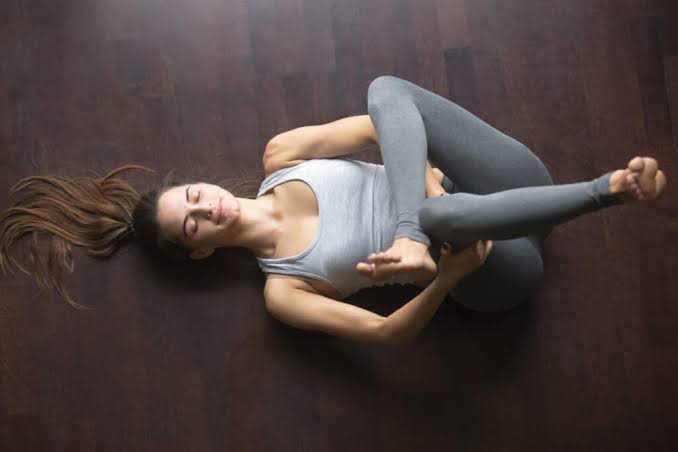
- 1.Lie on your back with both knees bent, feet flat.
- 2.Cross the right ankle over the left thigh.
- 3.Thread your hands behind the left thigh and draw it toward you.
- 4.Keep the right knee opening away. Hold 8–10 breaths, then swap.
Practice Tips
- Keep the bottom foot on the floor instead of lifting the thigh.
- Press the top knee gently away with the elbow for more space.
Strengthen the Core and Glutes
Bridge Pose
Setu Bandhasana
Builds glute and hamstring strength that offloads the lumbar spine
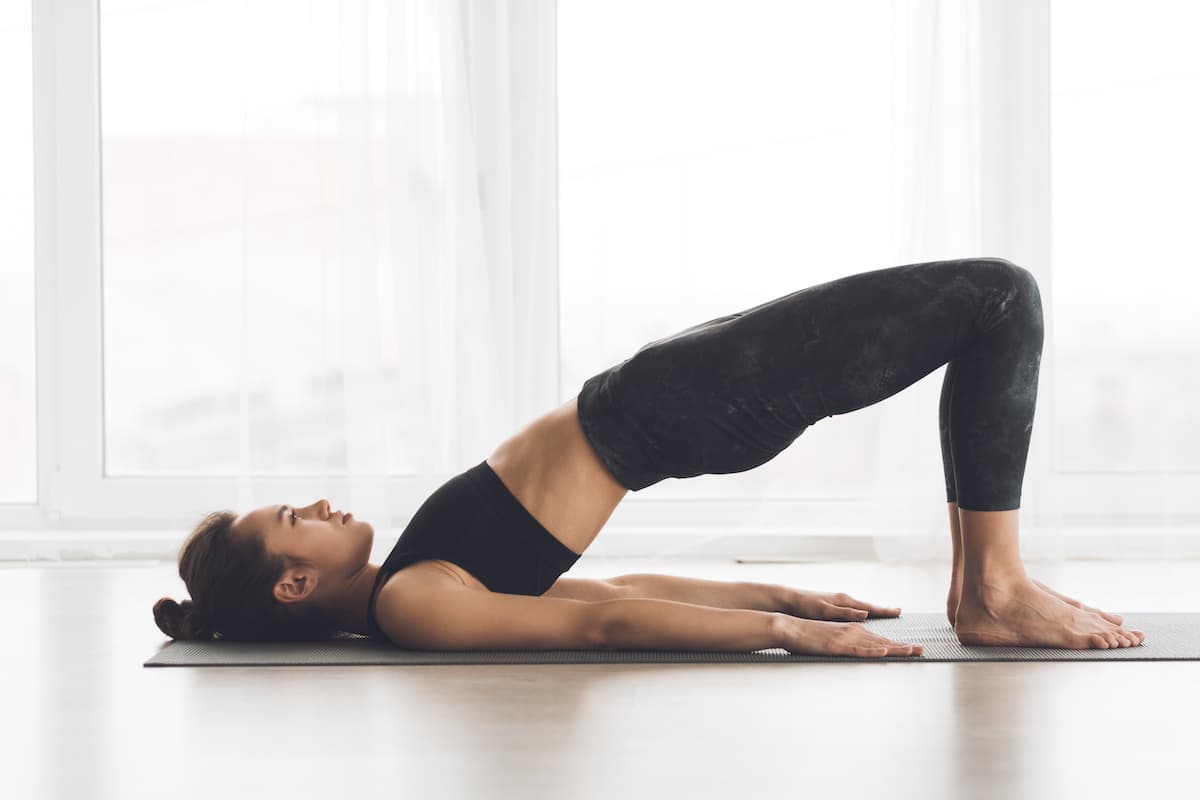
- 1.Lie on your back, knees bent, feet hip-width and close to the hips.
- 2.Press through the heels and lift the hips until the body forms a line.
- 3.Keep the ribs soft and the glutes engaged, not gripped.
- 4.Hold 5–8 breaths, then lower one vertebra at a time. Repeat 3 times.
Practice Tips
- Slide a block under the sacrum for a supported, restful version.
- Lower the range if the low back complains at the top.
Bird-Dog
Chakravakasana variation
Trains anti-rotation core stability without loading the spine
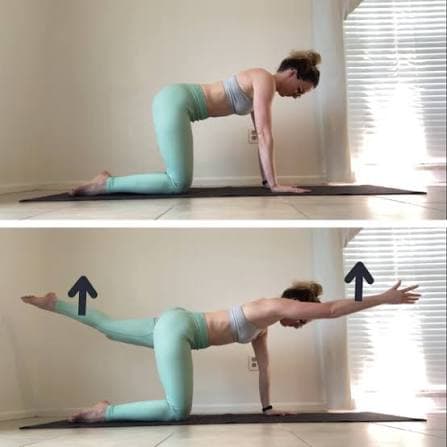
- 1.Start in tabletop with a long, neutral spine.
- 2.Extend the right arm forward and the left leg back, reaching in both directions.
- 3.Keep the hips and shoulders level — imagine balancing a cup on your low back.
- 4.Hold 3–5 breaths, return with control, then switch sides. 5 each side.
Practice Tips
- Extend only the leg, or only the arm, to start.
- Slow the movement down rather than reaching further.
Child's Pose
Balasana
Passively lengthens the low back · signals the nervous system to settle
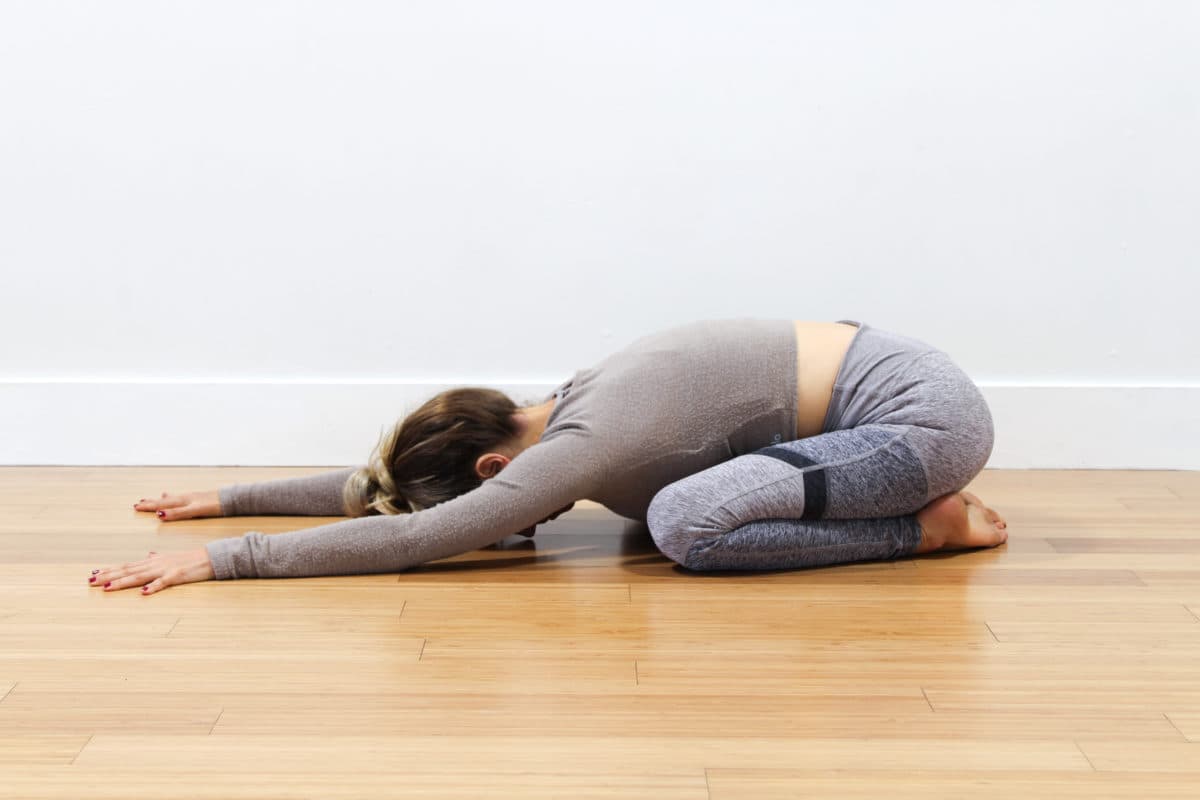
- 1.From tabletop, bring the big toes together and knees wide.
- 2.Sit the hips back toward the heels and walk the hands forward.
- 3.Rest the forehead on the mat, a block, or stacked fists.
- 4.Breathe into the back of the ribcage for 10–20 slow breaths.
Practice Tips
- Place a bolster or pillow under the torso to rest on.
- Widen or narrow the knees to find the most comfortable position.
Off-the-Mat Habits That Protect Your Back
Practice Tips
- Break up sitting every 30–40 minutes with a short walk or a few Cat–Cows.
- Set your chair and screen so the hips are slightly above the knees and the gaze is level.
- Hinge from the hips and keep loads close to the body when lifting.
- Walk daily — gentle, regular movement is one of the best-evidenced treatments for back pain.
- Prioritise sleep; poor sleep measurably increases next-day pain sensitivity.
Frequently Asked Questions
How soon will yoga help my lower back pain?+
Many people feel looser and more comfortable immediately after a gentle session. Lasting change — from rebuilt core strength and hip mobility — usually takes 4 to 8 weeks of near-daily short practice.
Which poses should I avoid with lower back pain?+
Until you are stronger and pain-free, be cautious with deep forward folds with straight legs, full backbends like Wheel, unsupported sit-ups and boat pose, and deep twists forced from the lumbar spine. Choose the gentler variations in this guide first.
Is it safe to practise during a flare-up?+
During an acute flare, favour only the most gentle movements — Cat–Cow with a small range, Knees-to-Chest, supported Child's Pose, and slow breathing. Skip strengthening work until the sharp pain settles, and see a clinician if it does not ease within a couple of weeks.
How often should I do this sequence?+
Once or twice daily is ideal, and each round only takes about 15 minutes. Consistency matters far more than intensity for back pain.